Chianti Goes Pink
- Rebecca Gouttenoire
- Sep 9, 2025
- 3 min read

Updated: Dec 11, 2025
A New Chapter for a Tuscan Classic: The Evolution of Chianti
When you think of Chianti, you likely picture a ruby-red wine. Perhaps it’s in a traditional fiasco (the straw-covered bottle) served alongside a rustic Tuscan meal. For centuries, Chianti has been the quintessential everyday wine of Tuscany—dry, fruity, fresh, and moderately alcoholic. This makes it the perfect companion for a variety of dishes.
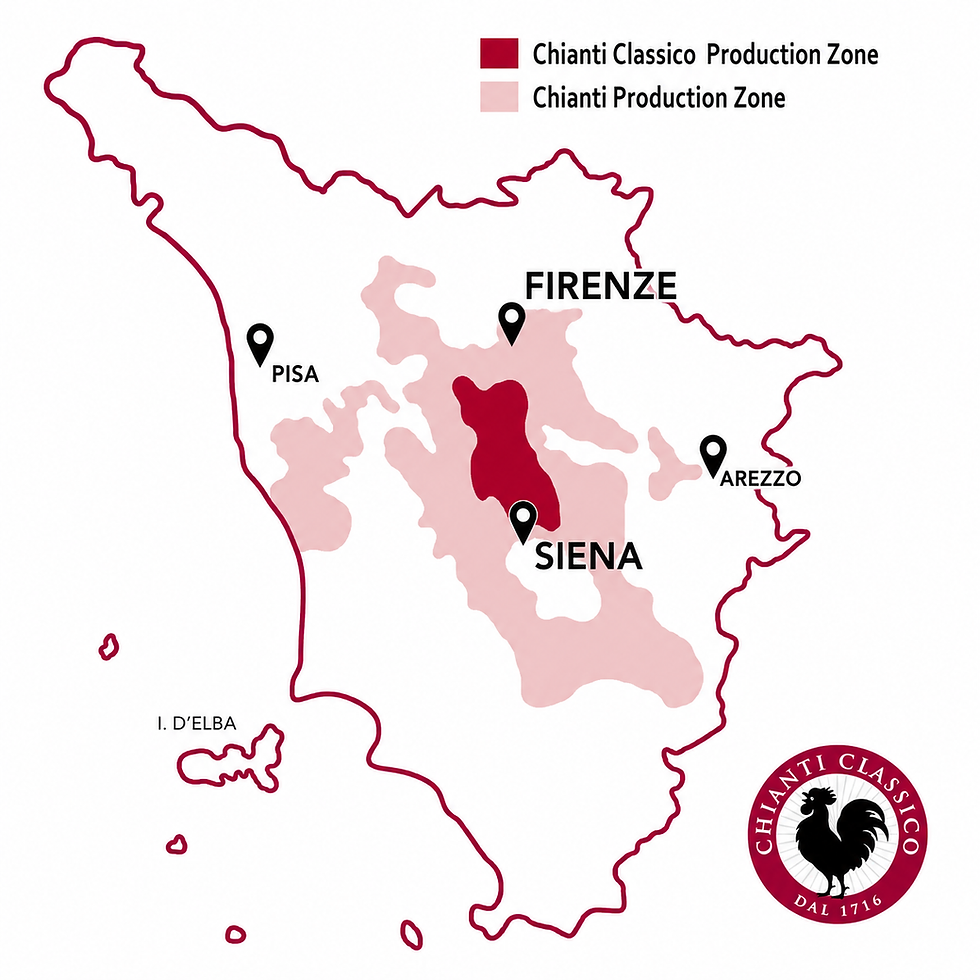
But here’s an important detail: Chianti is not the same as Chianti Classico. While Chianti Classico comes from the historic, central zone—the very heart of Tuscany marked by the iconic black rooster—Chianti as a designation covers a much larger area surrounding it. This wider region produces great quantities of red wine, typically aged around one year, and designed to be approachable and ready to drink.
The Fluctuations of Chianti’s Popularity
The production scale is massive: about 100 million bottles a year. Historically, around 20–25% of these bottles have been exported to the U.S., making America one of Chianti’s most important markets.
However, the tides are changing. With global wine consumption in decline and tariffs looming in 2025, many Chianti producers are concerned. The drop in demand, paired with uncertainty in international trade, has left the region searching for ways to remain relevant and competitive.
A Bold Move: Introducing Chianti Rosato
In response, the Consorzio of Chianti (the governing body for the denomination) has taken a bold step: introducing a brand-new style of Chianti—a rosé wine, or rosato, as we call it here in Italy.
This isn’t just any rosé. The rules state it must be made with at least 50% Sangiovese, the same noble grape that defines Chianti’s red wines, combined with other locally grown red and white grape varieties.
Unlike red Chianti, which requires some aging, Chianti Rosato will be vinified like a white wine. This means it will be bottled and released in the spring following the harvest, allowing producers to get their wines to market quickly—an important strategy in today’s fast-moving wine world.
The hope? That this new pink version will revitalize interest in the Chianti name, appealing to younger drinkers and those looking for a fun, refreshing wine to enjoy in warm weather.

Will the World Embrace a Pink Chianti?
It’s a daring shift for a region so deeply rooted in tradition. While rosé wine has been gaining popularity worldwide, some wine lovers may be hesitant to embrace a pink version of a wine they’ve always known as red.
But who knows? Perhaps the idea of sipping a chilled glass of Chianti Rosato by the poolside will catch on, giving new life to this iconic Tuscan wine. Only time—and a few sips—will tell.
The Future of Chianti: Embracing Change
As the wine industry evolves, Chianti must adapt to survive. The introduction of Chianti Rosato is just one step in a series of changes that may occur. The goal is to attract a broader audience while maintaining the quality and tradition that Chianti represents.
Understanding Chianti’s Unique Characteristics
Chianti is known for its distinct taste profile. The blend of Sangiovese with other grapes contributes to its unique flavour. This complexity is what makes Chianti a versatile wine, pairing well with various foods.
The Role of Terroir in Chianti Production
The concept of terroir is crucial in understanding Chianti. The soil, climate, and local practices all influence the wine’s character. Chianti's diverse landscapes contribute to the variety of flavours found in its wines.
Chianti and Food Pairing: A Perfect Match
Chianti is often enjoyed with traditional Tuscan dishes. Its acidity and fruitiness complement rich foods like pasta with meat sauce, grilled meats, and aged cheeses. The versatility of Chianti makes it a staple at the dinner table.
The Impact of Global Trends on Chianti
Global wine trends significantly affect Chianti's market. As consumer preferences shift, Chianti producers must stay ahead of the curve. This includes exploring new styles and marketing strategies to appeal to modern wine drinkers.
Sustainability in Chianti Production
Sustainability is becoming increasingly important in wine production. Many Chianti producers are adopting eco-friendly practices to reduce their environmental impact. This commitment to sustainability can enhance the region's reputation and appeal to conscious consumers.
A Bright Future for Chianti
The future of Chianti looks promising. With innovative approaches like Chianti Rosato and a focus on sustainability, the region is poised to attract new fans. As Chianti continues to evolve, it remains a symbol of Tuscany’s rich wine heritage.