
7. Cooking with Extra Virgin Olive Oil

Updated: Aug 12
(Yes, You Can Fry With It.)
"One of the biggest surprises for visitors to Tuscany isn't what we cook with.
It's what we cook everything with."
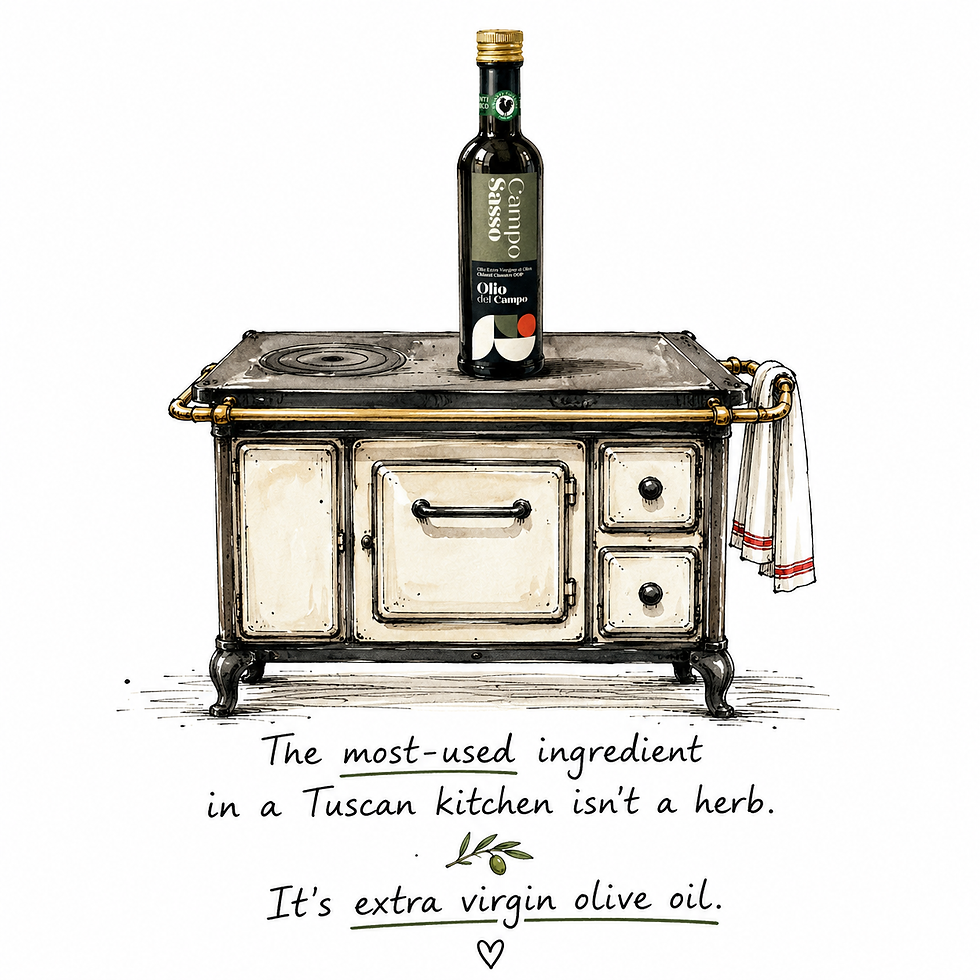
The first time someone visits an Italian kitchen, they often notice something surprising.
There's only one bottle beside the stove.
Extra virgin olive oil.
Vegetables?
Olive oil.
Pasta sauce?
Olive oil.
Roast chicken?
Olive oil.
Soup?
Olive oil.
Even frying?
Extra virgin olive oil.
I still smile when guests on our tours ask me:
"Surely you don't use the expensive olive oil for cooking?"
Actually...
That's exactly what we do.
Some bottles are reserved for finishing a dish at the table, of course.
But cooking with extra virgin olive oil isn't unusual in Tuscany.
It's simply everyday life.
So why has the rest of the world become so nervous about heating it?
Let's clear up a few myths.
Myth: "You Should Never Cook with Extra Virgin Olive Oil"
This is probably the biggest myth of them all.
People often imagine that heating extra virgin olive oil somehow destroys it instantly.
It doesn't.
In fact, numerous scientific studies have shown that good-quality extra virgin olive oil is remarkably stable during cooking thanks to its high levels of natural antioxidants and monounsaturated fats.
Those same polyphenols we've been talking about throughout this series don't just contribute bitterness and pepperiness.
They also help protect the oil as it's heated.
Many refined seed oils contain fewer of these naturally occurring protective compounds.
So while all fats eventually degrade if overheated, high-quality extra virgin olive oil often performs better than people expect.
What About the Smoke Point?
You've probably heard people say:
"You can't cook with olive oil because of its low smoke point."
It's true that every cooking fat eventually begins to smoke.
But the smoke point is only one part of the story.
What's often more important is how well the oil resists oxidation while it's being heated.
Good extra virgin olive oil generally has a smoke point somewhere around 190–210°C (375–410°F), depending on the oil.
That's comfortably above the temperatures used for most everyday cooking.
Sautéing vegetables.
Roasting potatoes.
Making tomato sauce.
Grilling meat.
Baking fish.
All are well within its comfort zone.
So... Can You Fry?
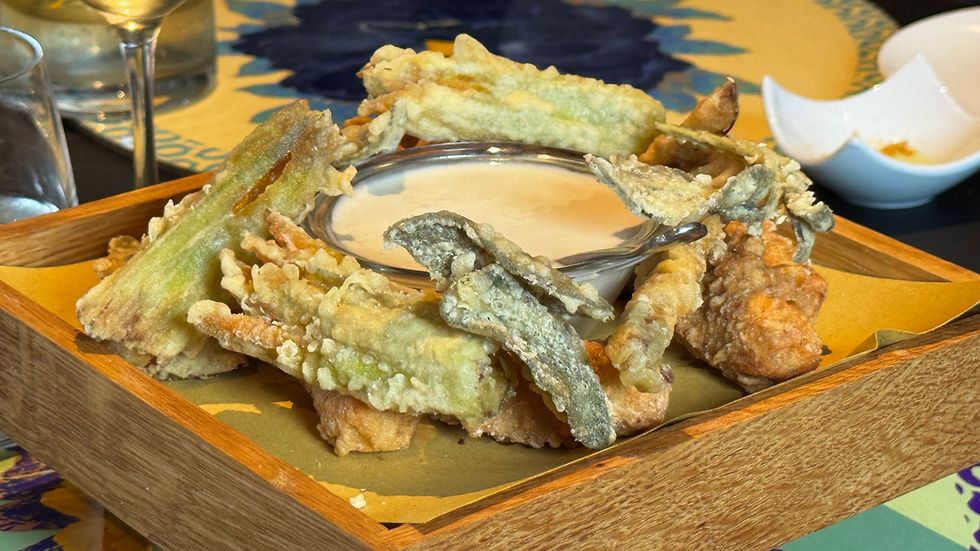
Yes.
Even deep-fry.
Many people are surprised to learn that it's possible to use Extra Virgin Olive Oil to fry with.
Ask almost any Tuscan olive oil producer. We wouldn't dream of using anything else.
Will it cost more than refined vegetable oil?
Absolutely.
Will the food taste different?
Absolutely.
Is it unsafe?
Not at all.
The real question isn't whether you can fry with extra virgin olive oil.
I always fry with extra virgin olive oil. But I save the freshest bottles for finishing dishes where its aromas can really shine.
We Actually Use Different Olive Oils
Here's something that surprises many visitors.
Most Tuscan families don't use exactly the same olive oil for every purpose.
The newest, freshest bottle—the one bursting with green aromas and pepperiness—might be reserved for:
Bruschetta
Tomato salad
Burrata
Bean soup
Grilled steak
Finishing a pasta dish
Meanwhile, last year's olive oil is often used for everyday cooking.
Not because it's "bad."
Simply because some of its fresh aromatic intensity has mellowed.
Remember what we discussed in the previous article?
Good olive oil doesn't suddenly become unusable after eighteen months.
It gradually loses some of its vibrant aromas and peppery character.
That makes it perfectly suited to cooking.
When Should You Use Your Best Olive Oil?
Whenever you want people to taste it.
Think of olive oil as another seasoning.
You wouldn't spend hours making a beautiful meal and then finish it with stale pepper.
Fresh olive oil deserves the same respect.
Some of my favourite finishing touches include:
Fresh burrata
Bruschetta
Tomato salad
Soups
Ribollita
Grilled vegetables
Pizza straight from the oven
Grilled steak
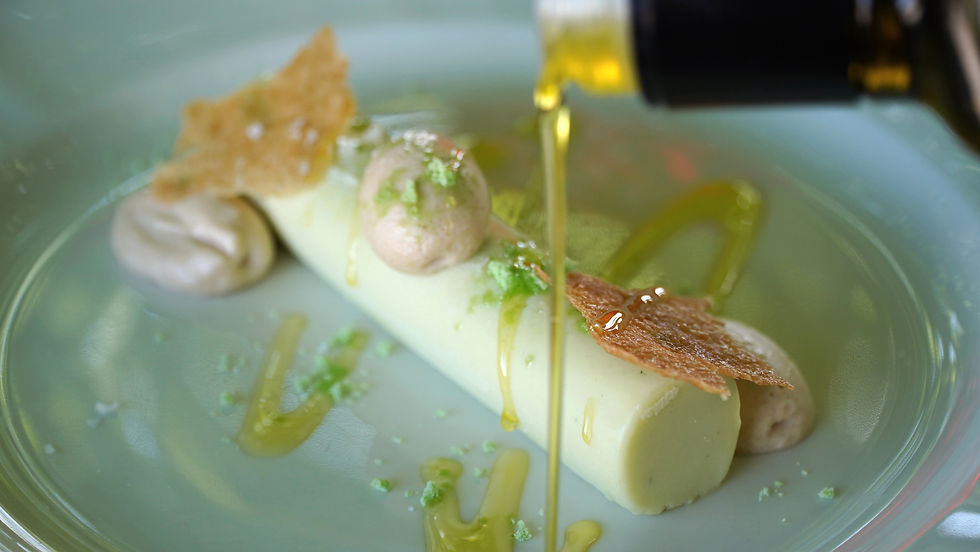
Desserts (!)
Olive Oil and Butter Don't Have to Compete
Another misconception is that olive oil must replace butter.
Here in Tuscany, that's rarely how we think about it.
Sometimes butter is exactly the right ingredient.
Sometimes olive oil is.
Sometimes the two work beautifully together.
A little butter can add richness.
A drizzle of fresh extra virgin olive oil added just before serving brings freshness, aroma and brightness.
They're not rivals.
They're simply different tools.
One Last Thought
One of the nicest compliments I receive from guests is when they write to tell me they've stopped "saving" their olive oil.
Instead of keeping it in the cupboard waiting for a special occasion, they now cook with it almost every day.
That makes me smile.
Because olive oil isn't meant to sit in the cupboard waiting for a special occasion.
It's meant to be drizzled over lunch.
Stirred into soup.
Poured over grilled vegetables.
Shared around the table.
That's exactly how we use it here in Tuscany.
Every single day.


Comments