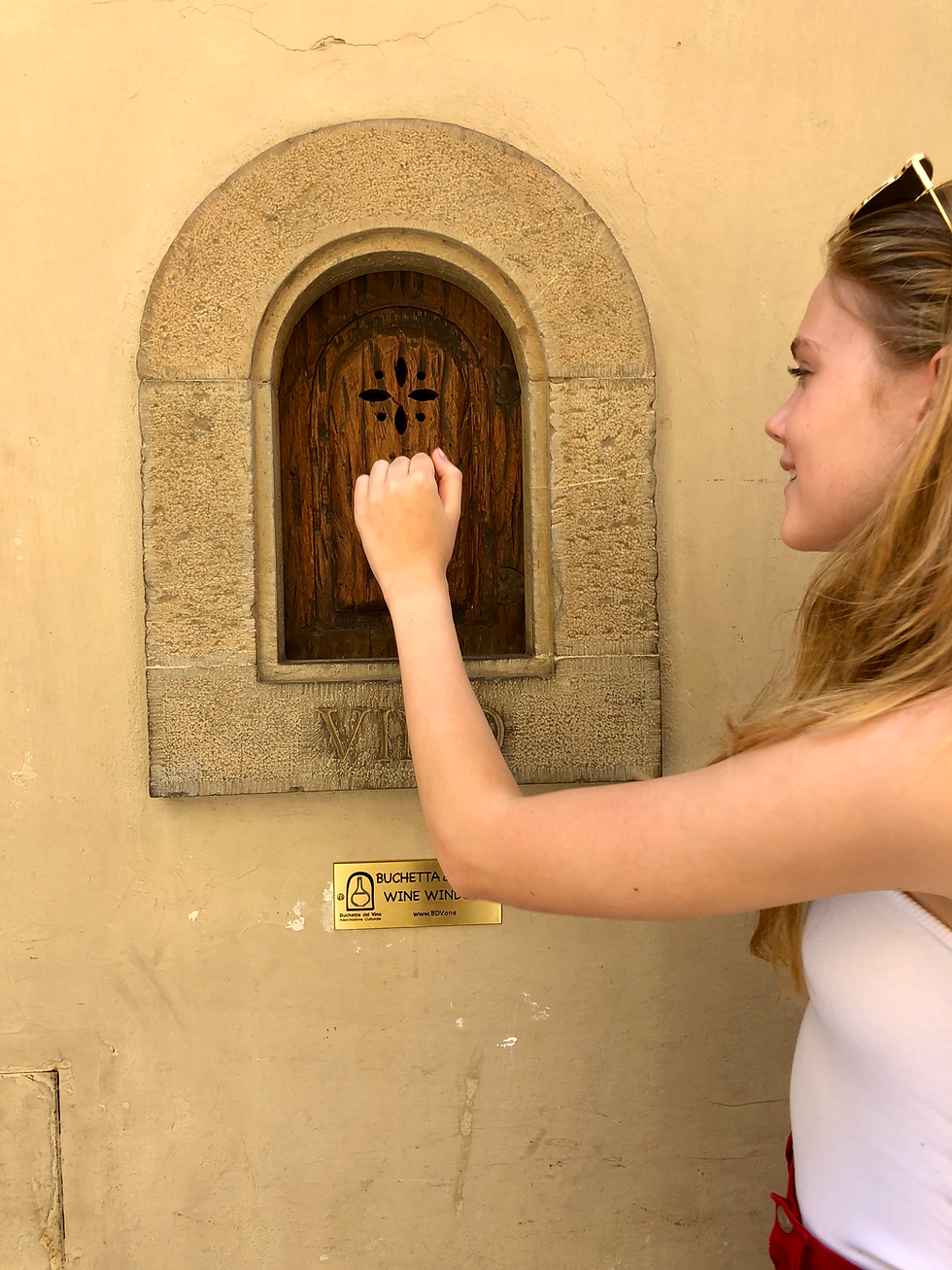
Florence is not just a city of art and architecture—it is also a city shaped by wine. For centuries, wine flowed through its streets as a daily staple and a regulated trade, overseen in the Middle Ages by the Arte dei Vinattieri, the powerful wine guild that controlled quality and sales within the city walls. Noble Florentine families such as the Medici, Antinori, and Frescobaldi owned vast vineyard estates in the surrounding countryside and sold their wines directly from their palaces through small openings known as buchette del vino, many of which still punctuate Florence’s streets today. In 1716, Grand Duke Cosimo III de’ Medici made wine history by issuing a decree that legally defined Tuscany’s most important wine zones, laying the foundations for the world’s first system linking wine quality to place. This tradition of regulation and respect for origin continued into the modern era, culminating in Italy’s DOC and DOCG laws after the formation of the Italian Republic. Walking through Florence today means walking through a living wine history—one written into stone walls, palace cellars, and centuries of Florentine life.